
Winter driving in Ontario brings slippery roads and unexpected hazards. When your car loses traction on ice, it can be hard to control the outcome. But if a collision occurs, the fault still has to be determined.
This article explains how insurance companies assess liability in skid-related accidents, what the Ontario Fault Determination Rules (FDR) say, and how you can protect yourself.
How Fault Is Determined After a Skid
Even if a driver didn’t mean to slide, intent doesn’t remove responsibility. Under Ontario’s Insurance Act, insurers follow the FDR to decide who’s at fault after a collision, regardless of road conditions.
That means if your car skids into another vehicle, you may still be found fully or partially liable.
The FDR uses diagrams and scenarios to assign percentages of fault (0%, 25%, 50%, 75%, or 100%). Adjusters compare your incident to these examples, ensuring consistent decisions across all insurance companies.
Related Article: Do Parking Citations Affect Insurance
Common Skid Scenarios and Who’s at Fault
Even when ice causes the loss of control, Ontario’s insurance rules still assign fault based on driver actions. Below are common skid scenarios and how liability is typically determined.
Rear-End Collisions
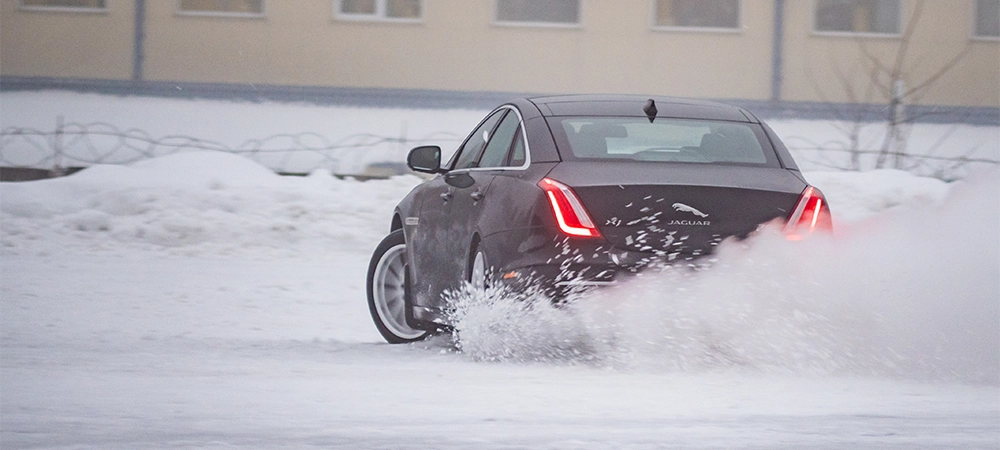
If you slide into the back of another vehicle, you’re almost always at fault. Drivers are expected to maintain a safe following distance and adjust for icy conditions. Even if you couldn’t stop because of black ice, insurers assume you should have been driving cautiously enough to prevent the collision.
Losing Control and Crossing the Centre Line
If you lose control and veer into oncoming traffic, you’ll likely be held 100% responsible. The reasoning is that each driver must keep their vehicle in their lane, no matter the weather. However, if another driver was speeding or making an unsafe pass, shared fault could apply.
Sliding Into an Intersection
When a vehicle skids through a red light or stop sign and causes a crash, fault usually rests with the skidding driver.
Even if the road was icy, it’s the driver’s duty to slow down earlier and anticipate the stop. In rare cases where a municipality failed to maintain a dangerously icy intersection, partial municipal liability may apply, though it’s difficult to prove.
Chain-Reaction Collisions
In multi-car pileups, fault is divided among the drivers whose actions directly caused impact. If your car was pushed by another vehicle into the one ahead, your insurer may consider you “not at fault” for that specific impact. But the initial skidding driver could carry most of the liability.
Single-Vehicle Skids
If your car slides off the road and hits a guardrail, pole, or tree, you’re deemed fully at fault. Comprehensive or collision coverage will handle the damage, but the accident may still affect your driving record and premiums.
Related Article: How Does Car Insurance Cost Per Month In Canada
Weather Doesn’t Erase Responsibility
A common misconception is that icy conditions absolve drivers of fault. In reality, insurance law treats poor weather as a known hazard.
Drivers are expected to adapt by:
- Reducing speed well below posted limits
- Avoiding sudden acceleration or braking
- Using proper winter tires
- Keeping a longer following distance
If investigators find you were driving too fast for the conditions, even if it was within the speed limit, you can still be held negligent.
How Insurers Assess Skid-Related Claims
When a claim is filed, the insurance adjuster collects all possible evidence, including:
- Police reports and witness statements
- Dashcam or surveillance footage
- Vehicle damage patterns
- Weather and road condition data
- Statements from both drivers
They then match these details against FDR. Once the assessment is complete, the insurer assigns fault percentages that directly impact your claim payout and future premiums.
If you disagree with the decision, you can request a review or provide additional evidence for reconsideration.
How Fault Affects Your Insurance Record
In Ontario, being found at fault even partially can affect your driving record and insurance premiums.
A single at-fault accident may:
- Increase your annual premium
- Affect your eligibility for accident forgiveness programs
- Stay on record for six years (depending on the insurer)
However, if you have a strong history of safe driving, your insurer may reduce the penalty or offer premium protection.
Related Article: Recreation Vehicle Insurance: A Guide to Coverage and Benefits
How to Protect Yourself During Winter Driving
Winter driving in Ontario demands more than caution; it requires preparation. These steps can help reduce your risk of skidding and keep you protected if an accident occurs.
1. Prepare Your Vehicle
Install winter tires early and keep them properly inflated. Check your brakes, battery, and windshield washer fluid before the first snowfall.
2. Drive Defensively
Avoid abrupt steering or braking. On icy roads, smooth control is key. Keep a greater distance between you and the vehicle ahead.
3. Use Technology Wisely
Anti-lock brakes (ABS) and traction control help, but they don’t eliminate skids. Learn how your system reacts so you can respond calmly.
4. Know Your Coverage
Confirm whether your policy includes collision coverage for damage to your own vehicle. Without it, you may pay out of pocket even if another driver caused the crash.
5. Report Accidents Promptly
Delaying a report can complicate fault determination. Always document the scene, take photos, and get contact details from all involved parties.
Related Article: Tips to Lower Car Insurance in Ontario
Why Expert Insurance Advice Matters
Accidents on icy roads can be confusing, especially when fault isn’t clear. Working with an experienced insurance broker ensures your claim is handled fairly and that your policy gives you the protection you expect.
At Buckler Insurance, our advisors can review your coverage, explain how fault may affect your rates, and help you file a claim with confidence.
Talk to a Buckler Advisor Today
Don’t wait until after a skid to understand your coverage. Let Buckler Insurance guide you through your auto policy, help you find better protection, and ensure peace of mind before the next storm hits.
Reach out to us today for more information.
Frequently Asked Questions
Does black ice change who’s at fault in an accident?
No. Icy roads don’t excuse liability. Drivers must adjust speed and maintain control regardless of black ice.
Can fault be split between drivers in a skid-related crash?
Yes. Insurers may assign shared fault (for example, 50/50) if both drivers contributed to the collision.
What if my car was rear-ended after I skidded to a stop?
The driver who hit you may be at fault if you were stopped safely and legally. However, if your skid caused a sudden obstruction, shared fault could apply.
How long does a skid accident stay on my insurance record?
Usually up to six years, depending on your insurer’s rating system.
Does my insurance cover damage if I hit a guardrail on ice?
Yes, if you have collision coverage. Without it, you’d pay for repairs yourself.
What happens if I disagree with my insurer’s fault decision?
You can request a review, provide new evidence, or escalate the case to the General Insurance OmbudService.
How can a broker help after a winter accident?
A broker like Buckler Insurance can explain fault rules, handle claim communication, and ensure your interests are represented.